Live oaks on the Grand Strand — the best tree we have, and the most protected
A big live oak is the strongest tree on the coast and almost always worth keeping. It's also a landmark in Myrtle Beach, a specimen in Horry County and a Tree Board matter in Conway. Caring for one here is half arboriculture and half paperwork, and we do both.
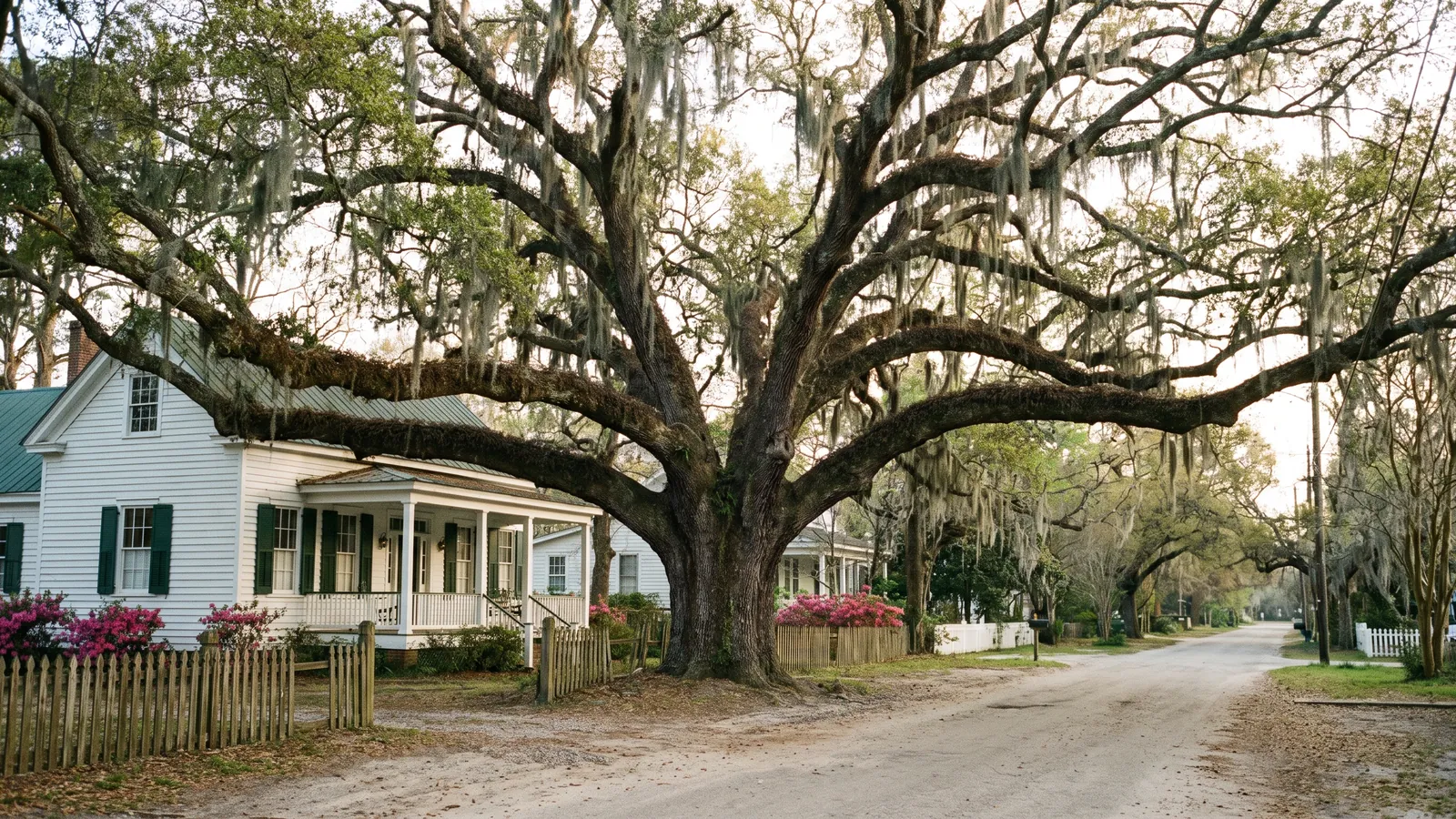
The live oak (Quercus virginiana) is the reason the Grand Strand looks the way it does: the allée at Brookgreen Gardens planted in the 1700s, the maritime forest at Myrtle Beach State Park, the named oaks of Conway, the big spreading trees over the older streets of Pine Lakes and the Waccamaw Neck. It ranks at the very top for wind resistance — 91 to 96 percent survival through the worst Gulf hurricanes — it tolerates salt spray, it lives for centuries, and it is, after the sabal palmetto, the tree the towns here care most about. Myrtle Beach makes a live oak 25 inches in diameter a landmark, removable only if a certified arborist documents it as hazardous or declining, with a $10,000 penalty per tree otherwise. Horry County makes every live oak 24 inches and up a specimen, on house lots included, since 2023. Conway's Tree Board decides on every live oak 24 inches and up and every tree on the Oaks of Conway map, and even pruning one needs a permit. Surfside calls a 24-inch live oak a landmark; Georgetown County protects everything over 10 inches on the Waccamaw Neck.
So live oak care here is two jobs. The first is keeping a 100- or 300-year-old tree healthy for another century: deadwooding, crown cleaning, weight reduction on the long horizontal limbs over the house, no topping ever, and protecting the root zone from the construction that's going on next door across the whole county. The second is the paperwork: knowing which town's rule your tree is under, what counts as pruning versus removal, when a permit is needed to prune, and how to document a genuinely hazardous oak so the removal is approved rather than fined. We've told a lot of owners that the oak the last crew wanted to take down is a landmark with another century in it — and we've taken down the ones that had truly failed, with the arborist letter, the permit and the town's blessing.
What's included
Species and size confirmed
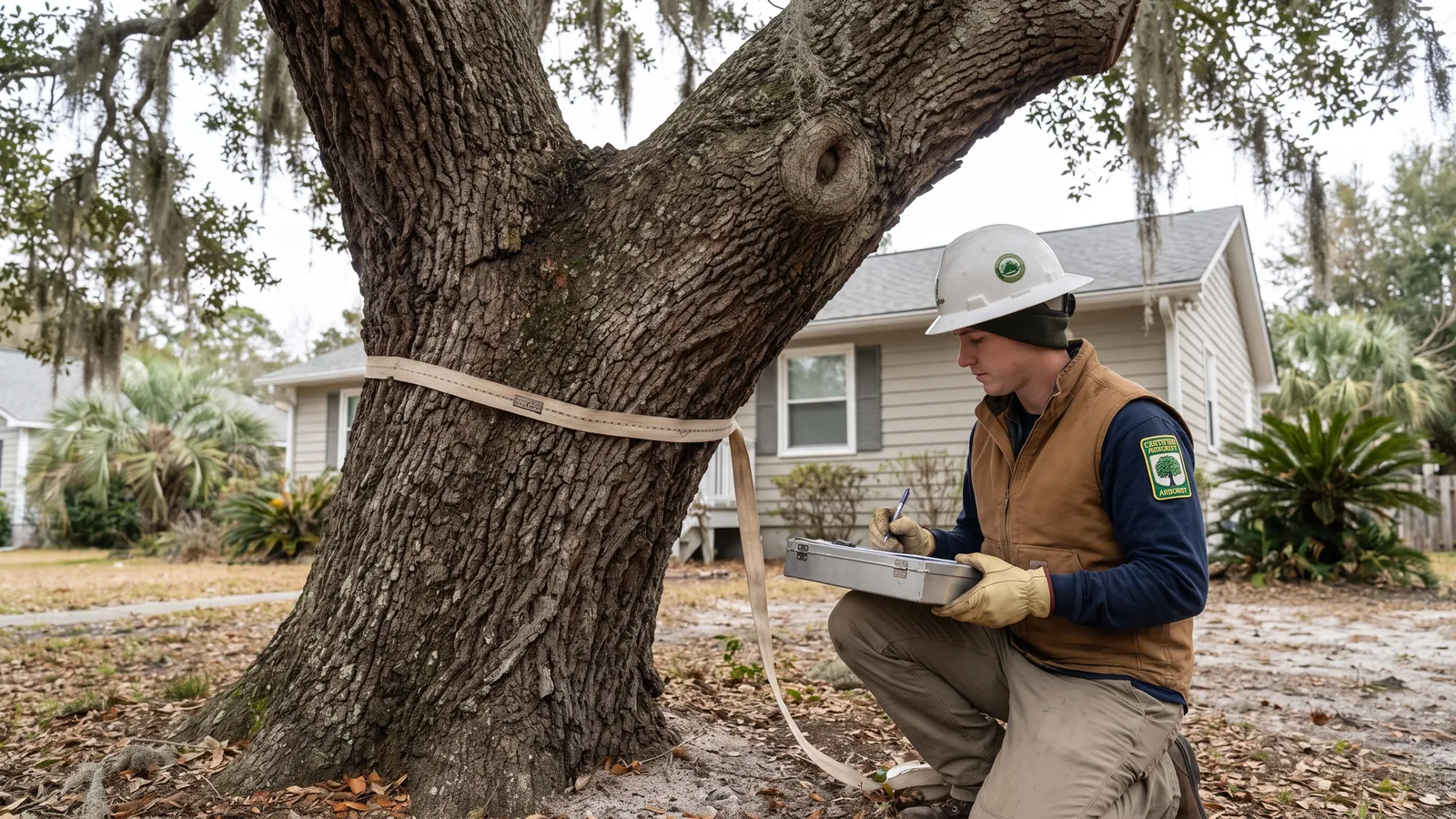
Live, sand live, laurel or water oak — and the DBH measured at 4.5 feet, because the town's threshold turns on it.
Preservation pruning
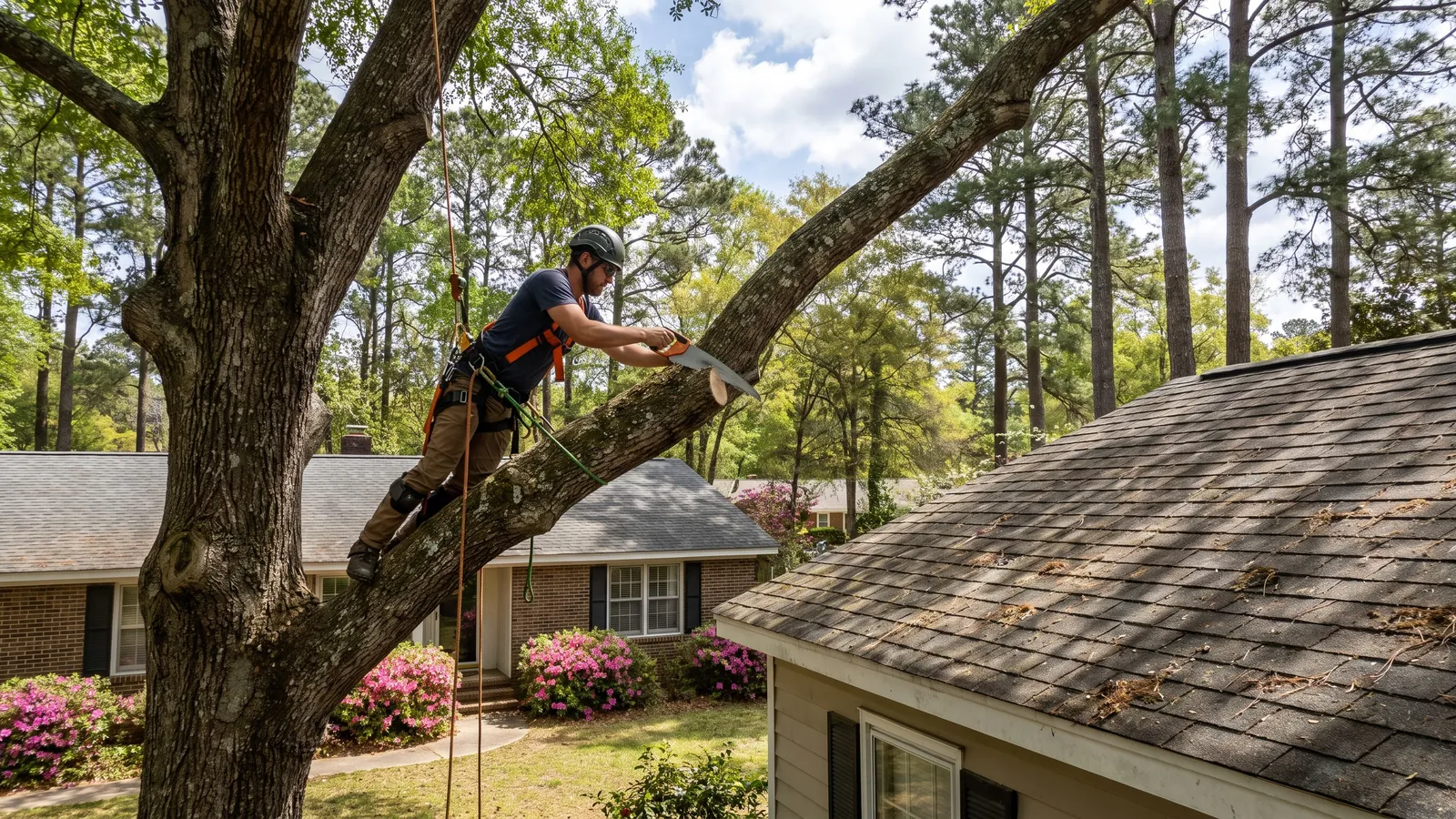
Deadwood, crown cleaning, weight reduction over structures, all to ANSI A300; never topping, never lion-tailing.
Permit to prune when required
Conway requires one for landmark oaks; Myrtle Beach and Georgetown County regulate what counts as pruning. We know where the line is.
Hazard documentation
When an oak is hollow, split or declining, our arborist writes the assessment the town needs to approve removal.
Root-zone protection
Specs and fencing for driveways, pools, utility trenches and new construction inside the critical root zone.
Spanish moss & resurrection fern
Left alone — they're harmless epiphytes — unless the moss load is breaking an already-weak limb.
Live oak pruning and care cost in Myrtle Beach, SC
| Job | Typical price | Notes |
|---|---|---|
| Live oak crown cleaning and deadwooding | $500 – $2,000 | Landmark-size trees |
| Weight reduction over the house, per limb | $150 – $500 | Cut back to a lateral |
| Hazard assessment and arborist letter | $150 – $350 | Credited toward any work; required by the towns for landmark removal |
| Conway or Horry County permit handling | Included | Conway permits are free; Horry mitigation fees are the owner's |
| Large live oak removal (rare, permitted) | $2,500 – $6,000+ | Only when it has truly failed and the town agrees |
These are 2026 Grand Strand ranges so you can budget. Your written price is itemized — the climb or bucket work, rigging, chipping and haul-off, stump grinding, crane time, the permit for your town — and good for 30 days.
Recent work
Questions we get about live oak care
How do I tell a live oak from a laurel oak?
Live oak leaves are thick, leathery, dark and oval with edges that curl under, and the tree keeps them all winter. Laurel oak leaves are thinner, longer and more pointed, and the tree drops them in spring. Live oak bark is deeply furrowed and blocky; laurel oak bark is smoother and grayer. The form: live oaks spread wide and low, laurel oaks go up. Send us a photo — the difference decides whether the tree is protected and whether it has a century left or a decade.
Is Spanish moss killing my oak?
No. Spanish moss is an epiphyte — it takes nothing from the tree. A heavy load on an already-weak limb can add weight, and a tree that's suddenly covered in it is sometimes a tree that's thinning for another reason, but the moss itself is harmless and we only remove it where it matters.
Can I prune my own live oak?
Light pruning, yes, in most towns. In Conway, pruning a landmark oak needs a permit. In Myrtle Beach, topping, stubbing or lopping a protected tree counts as removal and the owner is liable. Anything over a few inches, or anything over the roof, is worth having done to the standard.
My live oak is hollow. Can it come down?
If it's genuinely hazardous, yes — every town allows it with an arborist's documentation. We assess the tree (sounding, probing, a resistograph reading if it's close), and if it qualifies we write the letter and handle the permit. If it doesn't, we'll say so; a hollow live oak with a sound shell often has decades left.
What's the 2-year rule in Horry County?
If a specimen live oak is removed illegally on a parcel outside the city limits, the county can refuse building permits or subdivision approval on that parcel for two years. It's the main reason to measure and document before anyone cuts.